0%

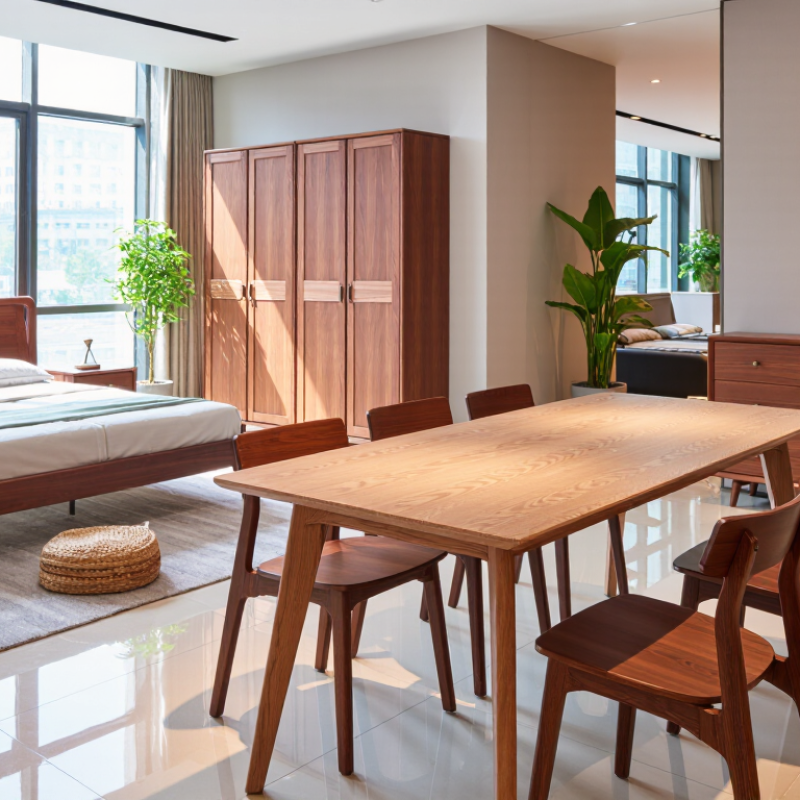
Finding the best Sungkai Wood Furniture in China requires more than browsing polished product photos. Sungkai, often known by its botanical name Peronema canescens, has a light grain, warm color, and naturally modest texture. These qualities suit dining tables, bed frames, cabinets, and relaxed contemporary interiors. Yet quality can vary sharply between suppliers.

China’s major furniture markets in Foshan, Dongguan, Guangzhou, and Shanghai offer useful starting points. Visit showrooms when possible. Touch the surface. Check whether the wood feels dry, stable, and evenly finished. Look beneath tables and inside cabinet corners. Clean joinery should show tight connections, consistent gaps, and no careless glue marks. Ask suppliers about wood origin, moisture control, kiln-drying procedures, and finishing materials. Request samples before placing a large order.

A reliable manufacturer should provide clear specifications, production photographs, inspection records, and realistic delivery terms. Independent quality inspections can reduce uncertainty, especially for overseas buyers. Factory audits also reveal details that catalogues hide, such as storage conditions and finishing practices. Trade fairs and established B2B platforms may help identify experienced vendors, but popularity alone proves little.

The word “best” needs care. A low price may reflect thinner panels, mixed timber, or weaker hardware. A beautiful sample may not match bulk production. Confirm every detail in writing. Even experienced buyers can miss small differences. This guide explores where to search, how to compare Chinese suppliers, and which questions can protect your investment in dependable Sungkai Wood Furniture.

Where to Find the Best Sungkai Wood Furniture in China?

What Is Sungkai Wood Furniture?

Sungkai wood furniture is made from a fast-growing tropical hardwood commonly found in Southeast Asia. Sungkai usually refers to Peronema canescens, a pale wood with a straight, lively grain. Its natural color ranges from creamy white to light brown, sometimes with darker streaks. The surface feels smooth after careful sanding. It also accepts stains and clear finishes well.

It is light, practical, and easier to move than many dense hardwoods. Not indestructible. Sungkai can dent under sharp pressure, so dining tables need protective finishing and sensible daily care.

Its open grain may show small knots or color changes. These details are not always defects. They can make each cabinet or chair look more natural. Poor drying, however, may cause movement, loose joints, or fine cracks. Good joinery matters.

In China, buyers can find Sungkai furniture through timber importers, furniture showrooms, and export-oriented workshops. Ask for the botanical name, wood origin, and kiln-drying information. A reliable supplier should explain the timber clearly.

Check the underside of a table, not only its polished top. Look for clean joints, even legs, and consistent moisture control. A strong chemical smell deserves questions. So does a vague answer about wood species.

I would also request a small finished sample before ordering many pieces. One sample can reveal uneven stain absorption, rough edges, or a finish that feels too soft. Sungkai is attractive, but it rewards careful selection.

China’s Main Sungkai Furniture Manufacturing Regions

Where to Find the Best Sungkai Wood Furniture in China?

China’s main Sungkai furniture manufacturing regions are concentrated near major timber ports and established furniture clusters. Foshan, especially Shunde and Nanhai, offers strong finishing, machining, and export capabilities. Dongguan’s Houjie area is also important for customized solid-wood furniture and flexible OEM production. These locations usually provide better access to drying rooms, spray-finishing lines, hardware suppliers, and container logistics.

Jiangsu’s Suzhou area and Zhejiang’s furniture clusters can also support Sungkai projects, although availability varies by factory. The International Tropical Timber Organization identifies China as the world’s largest tropical timber importer. However, Chinese customs statistics usually group Sungkai under broader timber categories. Exact species-level import data can therefore be difficult to verify. The China National Furniture Association reported furniture manufacturing revenue of about RMB 655.7 billion in 2023. This scale suggests strong supplier depth, but not automatic material expertise.

Tip: Ask factories for species confirmation, moisture readings, and recent Sungkai samples. Request Indonesian legality documents when the wood originates there. Compare grain consistency, kiln-drying records, and edge-joint quality. A factory near Foshan may quote quickly, yet its Sungkai experience could be limited. I would inspect a finished drawer, not only a polished tabletop. That small test often exposes weak joints, uneven color, or rushed sanding.

Where to Find the Best Sungkai Wood Furniture in China? - China’s Main Sungkai Furniture Manufacturing Regions

A practical sourcing guide to major Chinese furniture-production clusters handling imported tropical hardwoods, including Sungkai.

Region Representative Furniture Hubs Why It Is Relevant to Sungkai Furniture Common Product Categories Typical Manufacturing Strengths Important Sourcing Checks
Guangdong Foshan, Dongguan, Zhongshan, Shenzhen One of China’s strongest furniture-manufacturing and export regions, with broad experience in solid-wood, mixed-material, and made-to-order production. Dining tables, bed frames, cabinets, chairs, occasional tables, hospitality furniture Flexible customization, finishing options, export packaging, hardware integration, and coordinated supply chains Confirm that the quoted wood is genuinely Sungkai, check kiln-drying records, inspect sapwood and knots, and request finish samples.
Zhejiang Anji, Huzhou, Hangzhou, Ningbo A major home-furnishing area with strong capabilities in seating, wood components, panel processing, and furniture export. Dining chairs, lounge chairs, stools, small tables, home-office furniture Efficient component production, upholstery coordination, CNC processing, and large-volume order management Check whether solid Sungkai is used for structural parts or only for veneer, trims, or decorative components.
Jiangsu Suzhou, Nantong, Kunshan, Yancheng The Yangtze River Delta has mature furniture, woodworking, and export-support industries suitable for engineered production programs. Bedroom furniture, storage units, tables, desks, solid-wood and wood-combination furniture Stable production systems, standardized quality control, finishing consistency, and supply-chain coordination Request moisture-content measurements for finished components and verify resistance to warping during seasonal humidity changes.
Fujian Xiamen, Zhangzhou, Quanzhou, Fuzhou A coastal manufacturing and export region with access to imported timber, woodworking suppliers, and international shipping routes. Indoor tables, chairs, cabinets, rustic furniture, garden and covered-outdoor pieces Export-oriented production, wood finishing, mixed-material design, and small-to-medium custom orders Sungkai is generally better suited to indoor or protected applications unless an appropriate exterior coating and construction method are specified.
Shandong Qingdao, Linyi, Jinan, Weifang A significant northern furniture and wood-processing base, particularly suitable for standardized collections and broad domestic distribution. Bedroom sets, dining furniture, cabinets, shelving, office and commercial furniture Scalable production, panel and solid-wood processing, cost control, and high-volume fulfillment Clarify the percentage of solid wood, finger-jointed parts, veneer, and engineered board in the specification.
Hebei Bazhou, Langfang, Xingtai Known for furniture production and wholesale networks, making the region useful for ready-to-ship designs and price-sensitive collections. Coffee tables, dining sets, shelving, occasional furniture, flat-pack products Competitive pricing, repeatable designs, quick sampling, and efficient domestic distribution Do not rely on appearance alone; compare species identification, board thickness, joint quality, and actual wood content.
Sichuan and Chongqing Chengdu, Chongqing, Deyang A growing inland furniture-manufacturing area with expanding processing capacity and access to western China’s consumer and logistics markets. Residential furniture, tables, cabinets, upholstered furniture, customized interiors Domestic-market customization, integrated interior projects, and flexible mid-sized production Evaluate inland logistics costs and confirm the factory’s experience with imported tropical timber and export documentation.
Material note: Sungkai, commonly identified botanically as Peronema canescens, is a light-colored tropical hardwood native to parts of Southeast Asia. It is valued for its relatively light appearance and straight grain. Because Chinese factories generally process imported Sungkai rather than locally grown Sungkai, buyers should request the botanical name, country of origin, legality documents, moisture report, and a physical wood sample before placing an order.
How to compare regions: The regions above are broad furniture-manufacturing clusters, not exclusive Sungkai-growing areas. Actual Sungkai availability, minimum order quantity, lead time, and price depend on imported timber supply, product design, wood grade, kiln-drying requirements, finishing system, and export destination.

Where to Find Sungkai Wood Furniture Suppliers in China

China is a practical sourcing base for Sungkai wood furniture, especially around Guangdong, Zhejiang, Jiangsu, and Fujian. CSIL’s World Furniture Outlook 2024 identifies China as the world’s largest furniture manufacturing country. Its dense supplier network supports custom sizing, kiln drying, and container-scale production.

Look for suppliers with documented Sungkai sourcing, not only attractive showroom photographs. Sungkai usually refers to Peronema canescens, but timber names can vary across markets. Request the botanical name, country of harvest, moisture readings, and recent wood-identification records. A reliable factory should explain its grading system clearly. Ask for samples before discussing large orders. Small details matter, such as clean mortise joints, even sanding, and moisture levels near 8–12% for indoor furniture.

China Customs statistics placed the country’s furniture exports near US$73 billion in 2023, showing strong export capacity. However, export volume does not prove every supplier is experienced with Sungkai. ITTO’s Biennial Review and Assessment of the World Timber Situation stresses traceability and responsible timber documentation. Ask for harvest information, chain-of-custody evidence where available, and third-party inspection rights. I have seen catalogs describe mixed hardwood as Sungkai. That is a real sourcing risk. The supplier may be honest, or simply uninformed. Either way, independent verification remains necessary. Test the finish, check warping after conditioning, and compare the approved sample with the packed goods.

Where to Find Sungkai Wood Furniture Suppliers in China?

China’s main furniture sourcing clusters offer different advantages: Foshan is widely known for broad furniture manufacturing capacity, Nankang is a major solid-wood furniture center, Dongguan is strong in export-oriented production, Suzhou serves the Yangtze River Delta market, and Anji is recognized for wood and bamboo-related manufacturing. The scores represent practical sourcing priorities for buyers—supplier depth, solid-wood capability, export experience, customization, and logistics convenience—not company or brand market shares.

How to Evaluate Sungkai Furniture Quality and Craftsmanship

When searching for the best Sungkai wood furniture in China, quality begins with evidence, not appearance. Sungkai, or Peronema canescens, is valued for its pale color and visible grain. However, light wood can hide uneven drying or weak joints. The FAO’s Global Forest Resources Assessment 2020 records 4.06 billion hectares of forest worldwide, covering about 31% of global land. Responsible sourcing still requires traceable documents, not attractive showroom labels.

Ask the supplier for the wood’s origin, kiln-drying process, and moisture readings. For indoor furniture, a moisture level around 8–12% is commonly practical in many Chinese interiors, but local humidity matters. Test several points with a moisture meter. One reading is not enough. Examine the underside, drawer interiors, and rear panels. These areas often reveal rushed workmanship. A clean grain is pleasant, but it does not prove structural strength.

Good craftsmanship shows in tight mortise-and-tenon or dowel joints, even gaps, smooth sanding, and stable legs. Open drawers several times. They should move quietly without scraping. Check whether tabletops remain flat and whether chair joints wobble under light pressure. The 2023 ITTO Annual Review highlights traceability and legality as continuing priorities in tropical timber markets. Ask for chain-of-custody or legal-origin records where available. Finish quality also matters: it should feel even, without sharp edges, strong odor, or cloudy patches. Some minor color variation is natural. Perfect uniformity may signal heavy coating rather than better wood.

How to Choose a Reliable Sungkai Furniture Manufacturer

Where to Find the Best Sungkai Wood Furniture in China?

How to Choose a Reliable Sungkai Furniture Manufacturer

Finding reliable Sungkai furniture in China begins with the manufacturer, not the showroom. Sungkai wood has a warm grain, light color, and moderate strength. Ask where the timber was harvested and how its origin is recorded. A serious supplier should provide traceability documents, moisture readings, and clear material specifications. Do not accept “solid wood” as enough detail. It may hide mixed species or veneer.

Request a current workshop video, then compare it with a live video call. Look for clean cutting areas, dust control, organized drying rooms, and workers checking joints. Ask for a sample before placing a large order. Inspect the chair’s underside, drawer runners, screw placement, and surface smoothness. Press lightly around joints. Movement can reveal weak construction. The finish should feel even, without a sharp chemical smell or sticky patches. Kiln-dried Sungkai can still move if storage is poor. This is easy to overlook.

Reliable manufacturers explain tolerances, packaging, production schedules, and after-sales handling in writing. Their quotation should separate wood, hardware, finishing, packing, and shipping costs. Check whether inspections use measurable standards, such as moisture ranges and acceptable surface defects. Independent inspection adds confidence, especially for first-time buyers. Communication matters too. Delayed answers may become delayed production. Yet fast replies prove little. I once treated polished samples as proof of factory consistency; that judgment was too optimistic. Ask for photos from several production stages, not only the best finished piece. A dependable partner welcomes specific questions and admits what cannot be guaranteed.

FAQS

What is Sungkai wood furniture?

It is furniture made from a light tropical hardwood. The grain is straight and lively, with creamy white to light brown tones.

Is Sungkai wood strong and durable?

Sungkai is practical and moderately strong. Sharp pressure can dent it, so tables need protective finishing and careful use.

What natural features may appear in Sungkai furniture?

Small knots, darker streaks, and color changes may appear. These details are usually natural, not manufacturing defects.

How can I check the wood species before buying?

Ask for the botanical name, timber origin, and material specifications. “Solid wood” alone is not enough detail.

What should I inspect on a Sungkai furniture sample?

Check the underside, joints, drawer runners, screw placement, and surface texture. Press lightly near joints for movement or weakness.

Why is kiln drying important for Sungkai furniture?

Proper drying helps control movement, loose joints, and fine cracks. However, poor storage can still damage kiln-dried wood.

How can I evaluate a furniture manufacturer?

Request workshop videos, a live video call, and production-stage photos. Look for organized drying rooms and workers checking joints.

What should a clear quotation include?

It should separate wood, hardware, finishing, packaging, and shipping costs. Written production schedules and tolerances are useful too.

Does a polished sample prove consistent factory quality?

No. One attractive sample can hide uneven production. Request several samples or photos from different manufacturing stages.

When should I consider independent inspection?

Consider it for large or first-time orders. Measurable moisture limits and surface standards can reduce unpleasant surprises.

Conclusion

Sungkai Wood Furniture is valued for its naturally light color, visible grain, moderate strength, and versatile style, making it suitable for dining tables, chairs, cabinets, beds, and decorative home pieces. In China, production is concentrated in major furniture and woodworking regions such as Guangdong, Zhejiang, Jiangsu, and Fujian, where manufacturers combine imported timber with local processing, finishing, and design expertise. These areas offer a wide range of suppliers, from custom workshops to large-scale factories serving residential, hospitality, and commercial projects.

When searching for Sungkai Wood Furniture suppliers, buyers should compare product samples, factory capabilities, production capacity, export experience, and customization services. Quality evaluation should focus on properly dried wood, consistent grain, secure joints, smooth surfaces, durable coatings, and accurate dimensions. A reliable manufacturer should communicate clearly, provide transparent specifications and quotations, maintain consistent quality control, and support sample approval and pre-shipment inspection. Choosing a supplier based on craftsmanship, dependability, and long-term service can help ensure attractive, durable, and cost-effective furniture.

Amelia

Amelia

Amelia is a dedicated marketing professional with a deep understanding of the company’s products, customers, and industry landscape. With a strong combination of strategic thinking, market insight, and clear communication, she helps present complex product information in practical and engaging......