1. What prevents solid wood bench frames from cracking or warping in cold, dry climates?
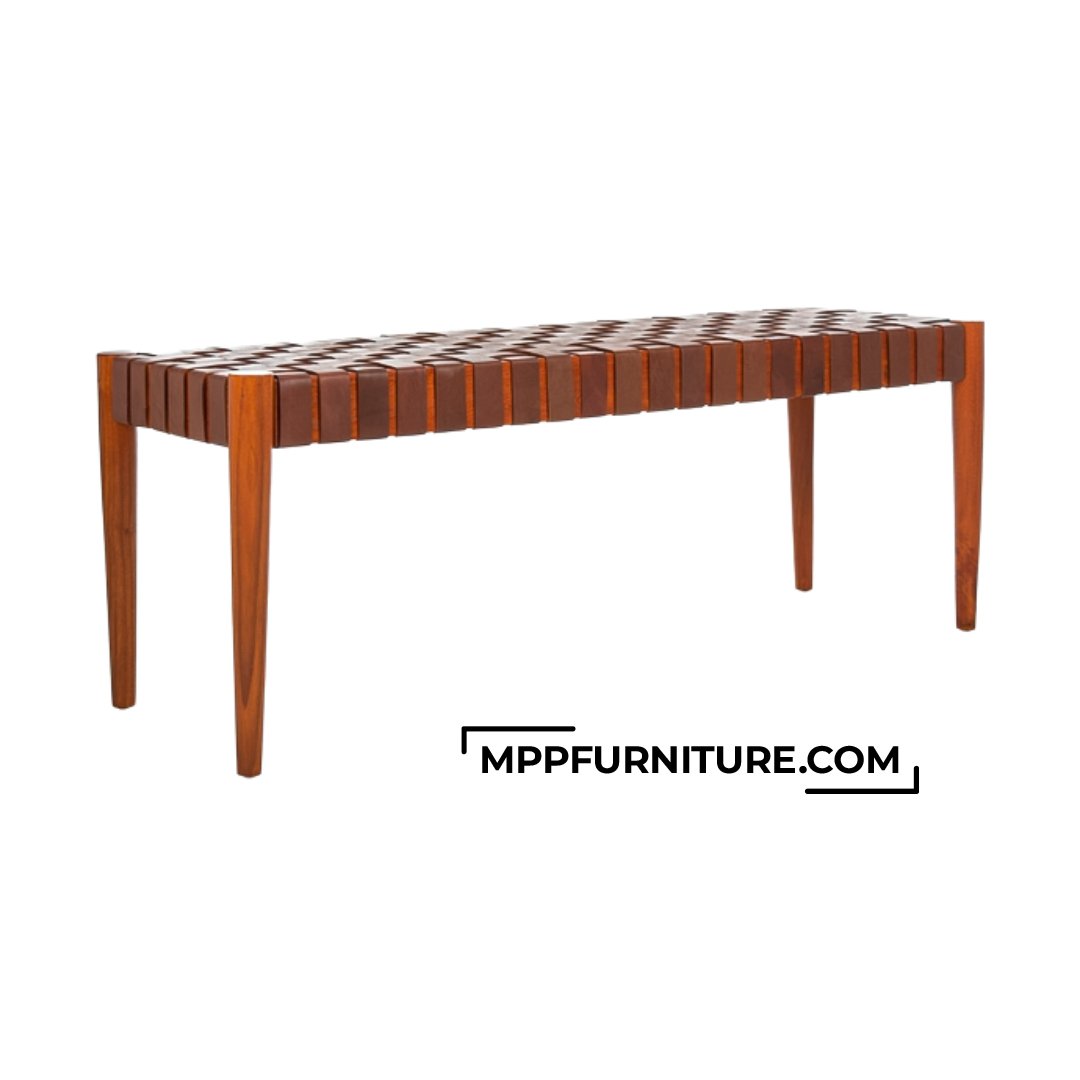
Frame failure in export markets is almost always caused by improper timber drying. At MPP Furniture, all timber (Teak, Mahogany, Sungkai, Mindi) undergoes forced-air drying followed by computer-controlled kiln drying to reduce internal moisture content to 8–12%. This equilibrium moisture content matches dry indoor heating environments in North America and Northern Europe, eliminating frame movement and joint separation beneath the leather upholstery.
2. How do you guarantee compliance with US Law Label and flammability regulations?
We manufacture all upholstered goods in compliance with California Technical Bulletin 117-2013 (CA TB 117-2013) standards using fire-retardant barrier fabrics and foam inserts upon request. Every piece exported to the USA or Canada is fitted with legally compliant US Law Labels detailing filling materials, manufacturer registration numbers, and compliance notices.
3. What is the Minimum Order Quantity (MOQ) for custom leather bedroom benches?
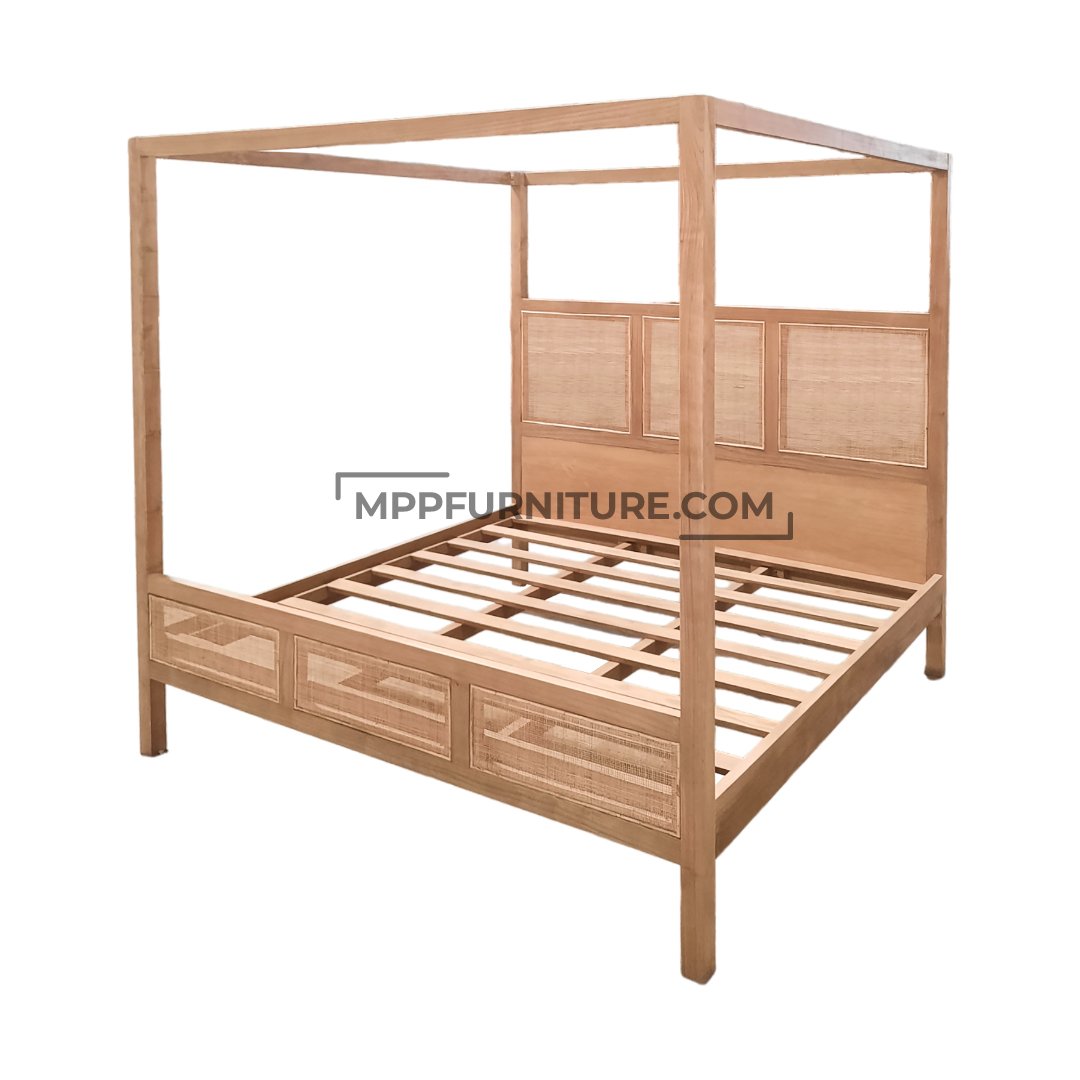
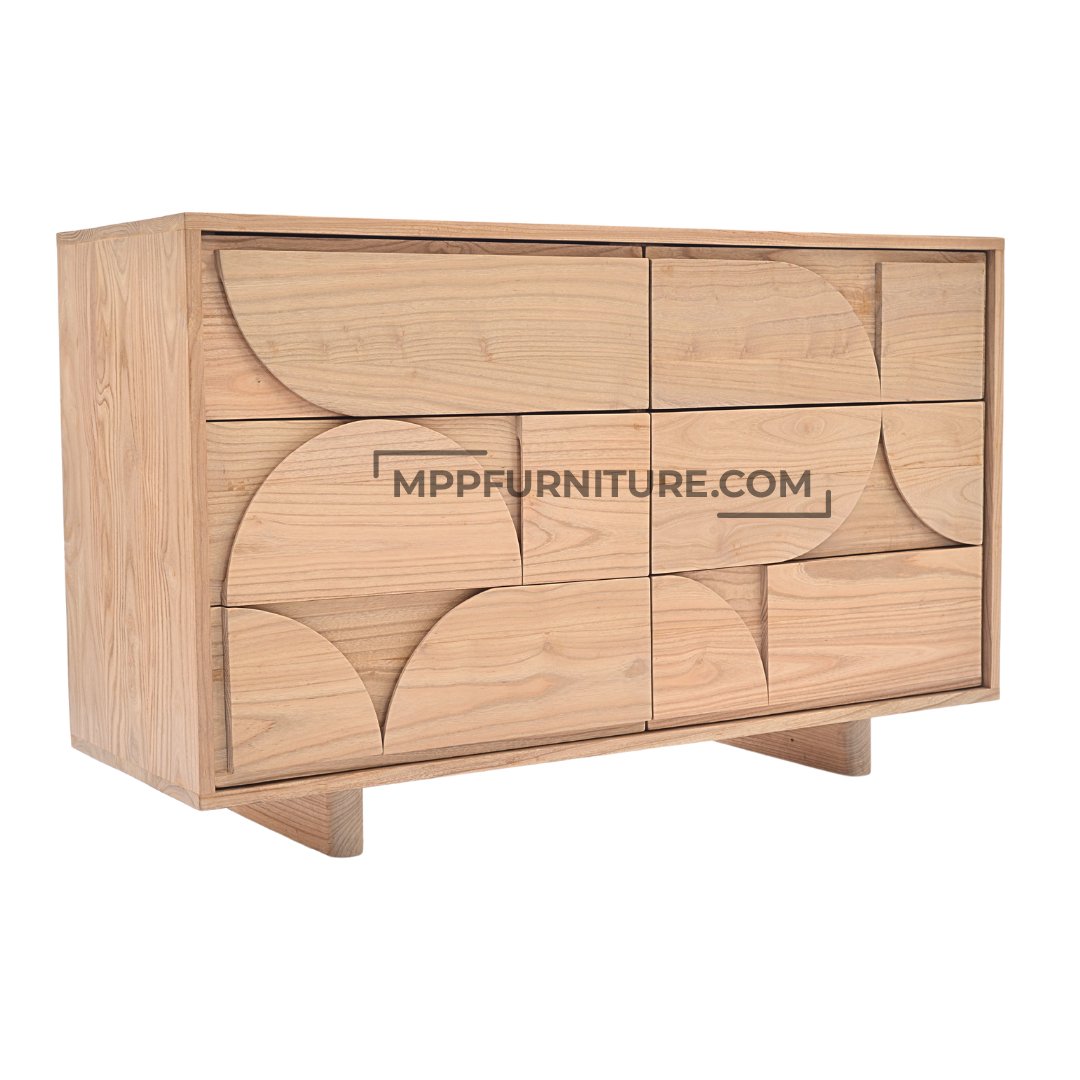
For standard catalogue bench models, our typical MOQ starts at 20–30 pieces per SKU. For fully custom OEM development or private-label collections, we work on a mixed 20ft or 40ft container basis. Importers routinely combine 4 to 8 different bedroom SKUs (such as beds, benches, nightstands, and dressers) to optimize container volume.
4. What leather options are available, and how do you handle color consistency across batches?
We source genuine top-grain cowhide leather, full-aniline leather, semi-aniline leather, and high-performance eco-leather. To ensure batch consistency for large retail orders, hides are color-matched under controlled lighting and cut from single-tannage dye lots. Spectrophotometer tests are conducted to keep color variation within strict industry tolerances (ΔE < 1.0).
5. Can we request mixed-material designs incorporating cane, rattan, or brass accents?
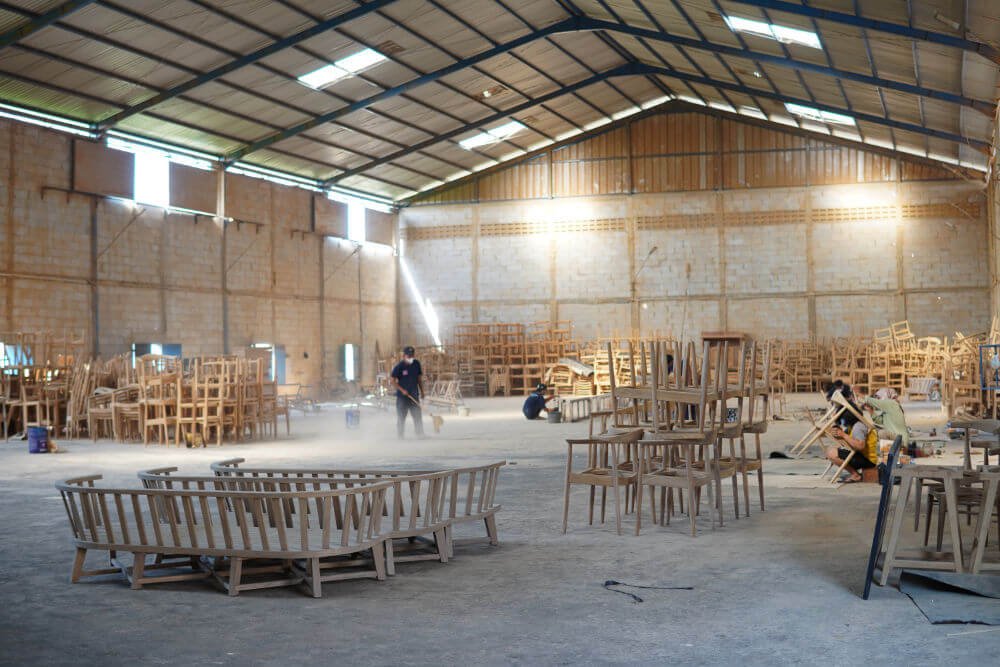
Yes. Our Cirebon facility specializes in hybrid material manufacturing. We regularly combine solid teak or mahogany bench frames with handwoven natural rattan under-shelves, hand-stitched leather cushions, and brass or powder-coated metal leg caps. All components are assembled and stress-tested on a single production line.
6. How are upholstered leather benches packed to survive long ocean freight transit without damage?
Leather furniture requires moisture and pressure protection during 30–45 days at sea. Benches are encased in breathable non-woven sleeves, fitted with custom-molded corner foam protectors, sealed inside plastic moisture barriers with silica gel desiccants, and packed into 275 lb test double-wall corrugated cartons. Heavy items are palletized using ISPM-15 compliant wooden pallets.
7. What legal timber documentation is provided with container shipments?
Every shipment includes official SVLK (Sistem Verifikasi Kelestarian Kayu) / V-Legal certificates issued by the Indonesian government. This paperwork provides complete supply-chain traceability back to sustainably managed plantation forests, fulfilling due diligence requirements under the EU Timber Regulation (EUTR/EUDR), UK TR, and the US Lacey Act.
8. How do we initiate an OEM custom bench project with your factory?
Simply send your design concept, 2D/3D CAD drawings, or reference images along with target specifications and order quantities to our export team. We will review structural feasibility, recommend timber and leather options, calculate FOB prices (Semarang or Jakarta port), and produce a physical golden sample for your sign-off prior to container production.