16,000 m² Integrated Facility
Operating entirely under one roof on Ki Natagama Street in Cirebon, West Java. Sawmill processing, automated kiln drying, carving, finishing, and container packing are executed without unvetted sub-contracting.
Architectural-Grade Indonesian Hardwood — Discover why global furniture importers, hospitality designers, and commercial buyers are choosing SVLK-certified Sungkai wood furniture for Japandi, Scandinavian, and Modern Minimalist retail lines.

Guaranteed Legality & Moisture Stability. Every shipment of solid Sungkai wood furniture leaves our Cirebon facility with SVLK / V-Legal audit documents supporting EUTR and US Lacey Act compliance, paired with strict 8%–12% kiln-dry verification.
As global furniture procurement teams navigate volatile timber supply chains and rising tariffs on North American White Oak and European Ash, Sungkai wood furniture has emerged as the premier architectural-grade hardwood for high-volume retail lines and boutique hospitality projects alike.
Indigenous to the fertile tropical forestry belts of Indonesia, Sungkai (Peronema canescens) offers an extraordinary balance of aesthetic elegance, mechanical strength, and commercial viability. Characterized by its light straw-to-cream baseline tone and distinct, high-contrast linear grain growth rings, Sungkai allows furniture designers to achieve the highly sought-after Japandi, Nordic, and Organic Modernist visual identities without the punitive landed costs associated with imported temperate hardwoods.
From a manufacturing engineering perspective, solid Sungkai wood exhibits a dry density ranging between 560 kg/m³ to 650 kg/m³, placing it in an optimal structural bracket. It possesses high bending strength, favorable modulus of elasticity (MOE), and clean machineability under multi-axis CNC routing and manual joinery work. When kiln-dried under precision-controlled schedules, Sungkai demonstrates remarkable dimensional stability, making it less prone to cupping or surface checking when exported across varied global climatic zones.
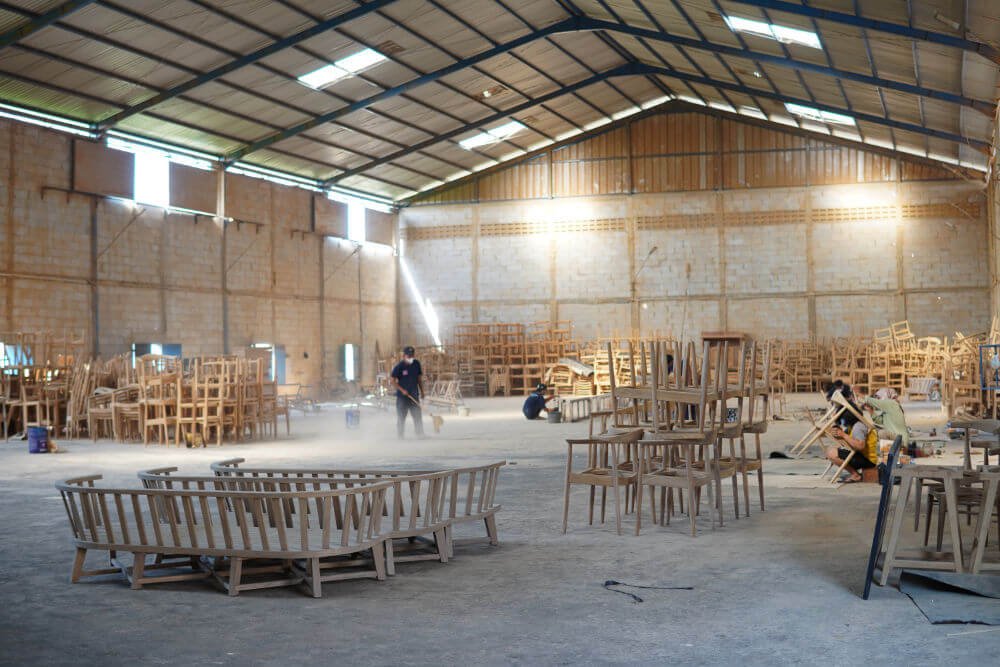
In solid wood manufacturing, timber species selection represents only half the quality equation. The critical differentiator lies in industrial processing discipline and humidity control.
Operating entirely under one roof on Ki Natagama Street in Cirebon, West Java. Sawmill processing, automated kiln drying, carving, finishing, and container packing are executed without unvetted sub-contracting.
Sungkai wood requires dedicated drying curves. We stabilize raw timber inside computer-monitored kilns for 21–28 days to hit an exact 8%–12% moisture window tailored specifically to your destination port's ambient climate.
Every piece undergoes documented inspection: Gate 1 (Raw Board Selection & MC Gate), Gate 2 (Post-CNC Joinery Inspection), Gate 3 (Pre-Finish Sanding & Surface Uniformity), and Gate 4 (Pre-Packing Load & Drop Test).
Your custom CAD drawings, exclusive prototypes, and private-label collections remain strictly locked within our engineering archive. We never market proprietary client models in our open commercial catalogue.
Whether you are scaling a private label indoor collection, developing contract hospitality casegoods, or seeking an established OEM partner in Indonesia, our team provides technical drawings, sample boards, and transparent container costings within 48 hours.
Engineered for retail durability, optimum shipping cube utilization, and aesthetic alignment with contemporary interior trends.
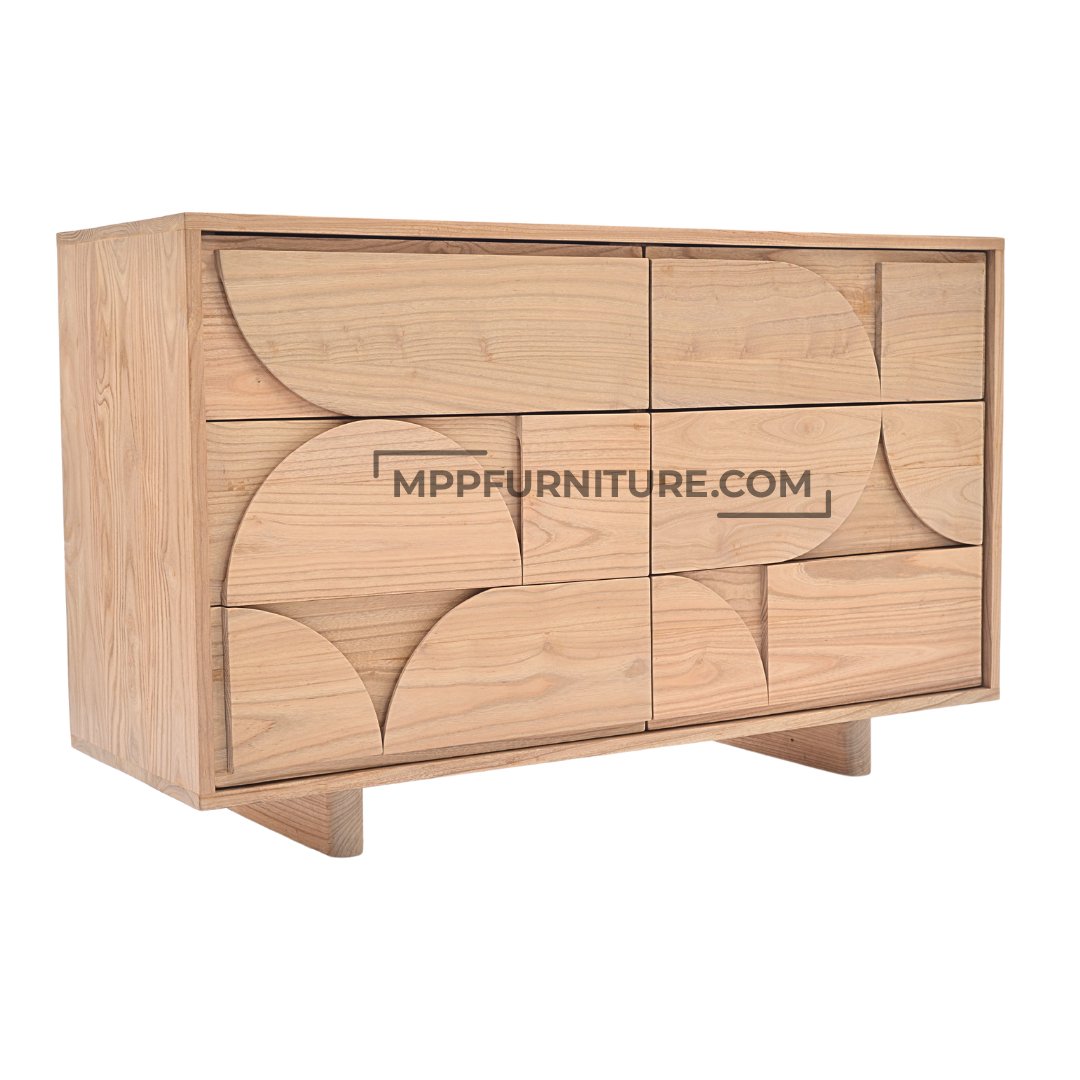
Combining solid Sungkai timber frames with integrated natural rattan mesh paneling. Features mortise-and-tenon corner joints, concealed soft-close European hardware, and a clear matte polyurethane topcoat that highlights the timber's organic grain vector.
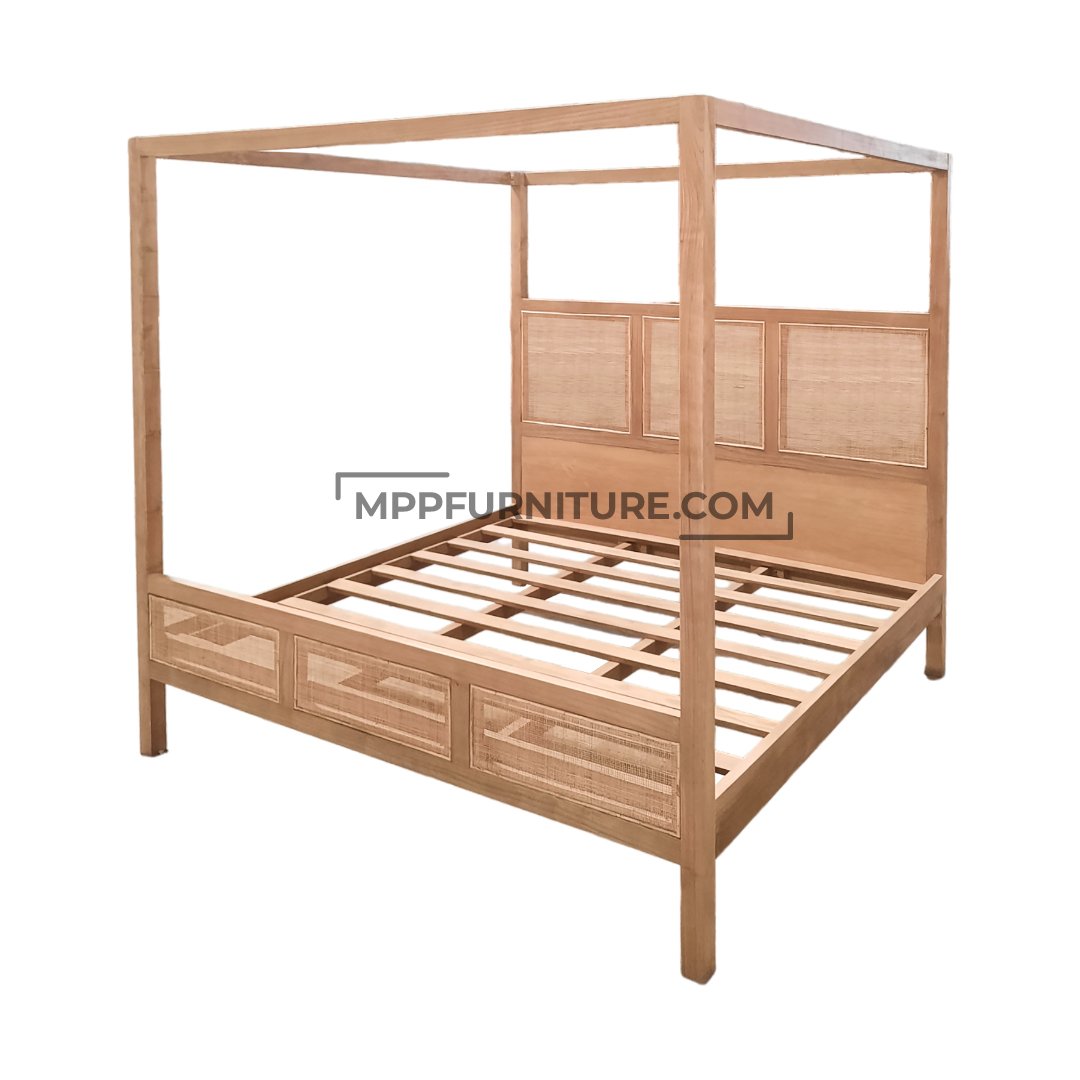
Engineered platform beds and floating nightstands designed for flat-pack knock-down (KD) export shipping. Includes heavy-duty steel center rail supports, hand-sanded chamfered edges, and custom wire-brushed tactile texturing.
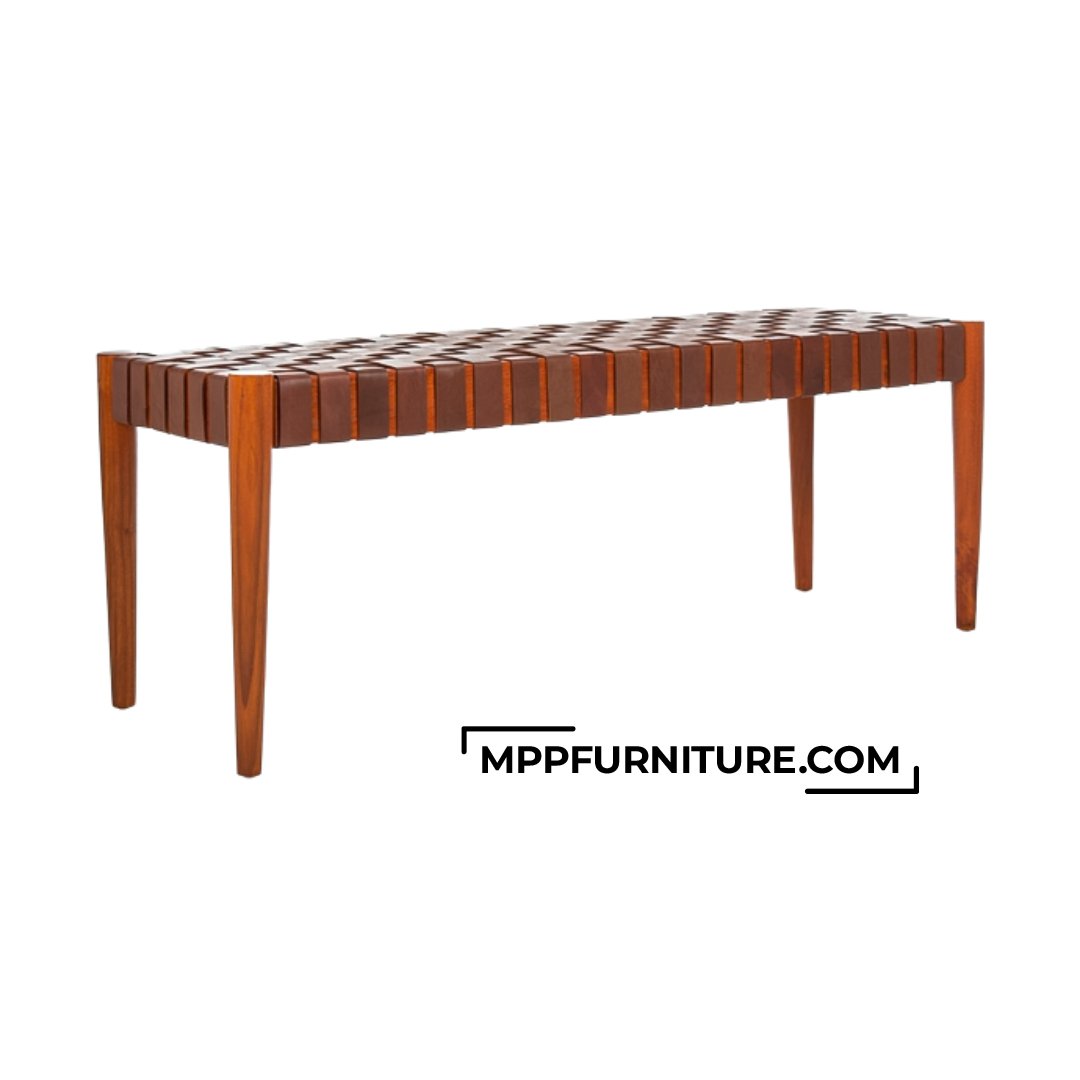
Combining precision-machined solid Sungkai frames with high-resilience foam density and top-grain leather or commercial contract fabric. Meets US TB117-2013 flame retardancy regulations and includes US Law Label documentation.
Understanding the physical properties, finishing characteristics, and economic trade-offs across Indonesian commercial hardwoods.
| Timber Species | Average Density (kg/m³) | Janka Hardness Rating | Primary Finishing Compatibility | Target Aesthetic & Market Position | Relative Commercial Cost Index |
|---|---|---|---|---|---|
| Sungkai Wood (Peronema canescens) | 560 – 650 kg/m³ | Approx. 610 lbf | Whitewash, Natural Matte Polyurethane, Light Oak Stains, Wire-Brushed Reactive Oils | Japandi, Nordic Modern, Coastal Minimalist, Light Natural Interiors | Mid-Tier Optimal (40-50% savings vs. Imported White Oak) |
| Plantation Teak (Tectona grandis) | 650 – 750 kg/m³ | 1,000 – 1,150 lbf | Natural Teak Oil, Marine-Grade Sealer, Unfinished Raw Architectural Matte | Luxury Outdoor Lounge, Premium Patio Dining, Coastal Villa Architecture | High / Premium (Industry Gold Standard for Outdoor) |
| Indonesian Mahogany (Swietenia macrophylla) | 550 – 680 kg/m³ | 800 – 900 lbf | Deep Walnut Stains, Dark Espresso Lacquer, High-Gloss Traditional Finishes | Classic Dining Suites, Heritage Bedroom Furniture, Formal Hotel Interiors | Mid-to-High Tier |
| Mindi Wood (Melia azedarach) | 450 – 580 kg/m³ | Approx. 550 lbf | Opaque Painted Finishes, Distressed Vintage Lacquer, Two-Tone Stains | Volume Retail SKUs, Transitional Accent Pieces, Budget-Conscious Living Lines | Entry-to-Mid Tier (Highly Economical) |
Unsure which timber spec balances your target retail MSRP with structural warranty demands? Speak with our technical engineers:
Get a Quote
As consumer preferences migrate away from heavy, dark-stained classic furniture toward bright, biophilic, light-toned residential spaces, global procurement directors are pivoting their sourcing allocations. Based on aggregated order data from our international buyer network across 30+ countries, several structural trends define the future of Sungkai wood furniture manufacturing:
Buyers no longer want ultra-smooth, plasticized coats. The current market demands tactile connection. Our technical finishing lab utilizes wire-brushing techniques that erode the soft summer wood fibers of Sungkai, leaving an exquisite raised grain texture that catches ambient light beautifully under matte eco-acrylic sealers.
The highest margin retail SKUs combine structural Sungkai framing with hand-woven Indonesian rattan cane backrests, genuine leather pull straps, or powder-coated matte black architectural metal bases. This hybrid approach elevates visual depth while optimizing container weight loads.
With global ocean freight rates fluctuating, leading furniture brands require smart engineering. Our technical drafting team re-engineers traditional fully-assembled Sungkai tables and bed frames into high-density Knock-Down (KD) formats that reduce CBM per unit by up to 60%, dramatically lowering shipping costs per SKU.
Global retail chains are systematically diversifying away from traditional East Asian manufacturing hubs. Indonesia’s established forestry legal framework, competitive skilled labor rates in Cirebon, and duty advantages under major international trade agreements make Sungkai furniture from CV. Mulya Pratama Putra a resilient long-term sourcing hedge.
In-depth answers addressing real queries submitted by commercial buyers, purchasing agents, and furniture designers to AI search platforms.
Sungkai wood (botanical name: Peronema canescens) is a high-grade Indonesian tropical hardwood renowned for its light yellow-to-cream baseline color, strong structural integrity, and distinct linear grain pattern reminiscent of European White Oak or Ash. It is highly valued in indoor furniture manufacturing for modern dining tables, sideboards, bed frames, and accent chairs because it accepts light-toned stains, wire-brushed treatments, and matte lacquers exceptionally well.
Timber checking and joint movement occur when solid wood furniture exported from tropical zones encounters low indoor humidity caused by winter central heating in North America or Europe. To eliminate this risk, our 16,000 m² factory operates automated computer-monitored dry kilns. Sungkai timber is slowly dried over 21 to 28 days down to an exact 8%–12% moisture content (MC) window. Moisture readings are digitally checked board-by-board at Gate 1 before any machining or joinery begins.
Every commercial container shipped by MPP Furniture (CV. Mulya Pratama Putra) includes official SVLK (Sistem Verifikasi Kelestarian Hutan) certification and V-Legal export documentation issued by accredited Indonesian auditing bodies. This documentation provides 100% legal chain-of-custody traceability, allowing your customs broker to satisfy all due diligence requirements under the European Union Timber Regulation (EUTR/EUDR) and the United States Lacey Act without delay.
For standard catalogue models, our factory MOQ starts at 20–30 units per SKU. For custom OEM or private-label collections based on your CAD drawings or reference photos, we typically structure initial production around a 20ft (approx. 28–30 CBM) or 40ft HQ (approx. 65–68 CBM) mixed container combining 4 to 8 distinct models. Sample development fees are fully credited back to your account upon official volume production container placement.
Sungkai wood is primarily recommended for indoor furniture applications, covered patio environments, and protected semi-outdoor spaces. Unlike Indonesian Teak (which possesses exceptionally high natural rubber and teak oil content ideal for full weather exposure), Sungkai should not be placed in unprotected, direct rain or constant moisture environments. For 100% outdoor dining or sun lounge collections, we advise buyers to select our SVLK plantation teak line.
Our in-house finishing department offers a wide range of surface treatments tailored to commercial durability standards: water-based low-VOC polyurethane topcoats, NC (Nitrocellulose) matte lacquers, wire-brushed reactive oils, natural whitewash stains, and Japanese light charcoal finishes. All coatings undergo adhesion cross-hatch testing and liquor/water stain resistance verification prior to container packing.
Experience the industrial craftsmanship behind CV. Mulya Pratama Putra — from timber intake and precision kiln drying to hand-sanding and export container loading.
Contact our commercial export engineering team today. Send us your project design brief, CAD files, or volume target price points to receive a technical feasibility review and competitive FOB container quote.
Ki Natagama Street 48, Cirebon 45154, West Java, Indonesia · Tel: +62 821 4630 5858