Buying Indonesian Mahogany Furniture requires more than comparing photographs, prices, and polished supplier websites. Reliable sourcing begins with visible craftsmanship and verifiable business practices. Buyers should examine timber origin, kiln-drying methods, joinery, finishing quality, packaging, and export experience. A beautiful dining table means little if its moisture level causes warping after arrival.
Ambar Tjahjono, a longtime Indonesian furniture-industry leader and former ASMINDO chairman, has stressed, “Quality is not only about appearance; it is about consistency.” That principle matters when evaluating the top Indonesian mahogany furniture suppliers. Consistency should appear in wood selection, measurements, surface texture, communication, and delivery documentation. Ask for current workshop images, production samples, moisture readings, and references from comparable buyers. Small details reveal much. Look closely at drawer alignment, corner joints, sanding marks, and the finish beneath the tabletop.
The strongest suppliers usually explain their materials without vague promises. They can discuss legal timber sourcing, responsible production, treatment requirements, and realistic lead times. Buyers should also confirm whether quoted prices include crating, inspection, inland transport, and ocean freight. These details are easy to overlook.
No supplier evaluation is perfect. Online portfolios can hide uneven production, and one excellent sample may not represent every shipment. That uncomfortable possibility deserves attention. This guide compares leading Indonesian suppliers through practical buying criteria, not marketing language alone. The goal is simple: help importers choose durable mahogany furniture with clearer expectations, stronger verification, and fewer costly surprises.
Indonesian Mahogany Supply: FAO Forest and Timber Data
Top Indonesian Mahogany Furniture Suppliers for Buyers
Indonesian mahogany supply requires more than checking furniture photographs. The FAO Global Forest Resources Assessment 2020 recorded about 92.1 million hectares of forest in Indonesia. It also reported continuing forest-area decline between 2015 and 2020. These figures provide essential context for buyers evaluating long-term timber availability.
FAOSTAT Forestry Production and Trade data tracks Indonesia’s roundwood and sawnwood flows, but it does not always separate mahogany clearly. That limitation matters. A supplier may describe mixed hardwood as mahogany without presenting species-level evidence. Buyers should request botanical names, origin records, harvest documentation, and production dates. Physical inspection helps too. Genuine mahogany usually shows a warm reddish-brown tone, moderate grain, and consistent density, though finishing can change its appearance.
The ITTO Annual Review and Assessment of the World Timber Situation also highlights the importance of traceability and domestic processing in tropical timber markets. Ask for chain-of-custody records where available. Compare shipment volumes with workshop capacity. The numbers should make sense.
Tips: Request a recent wood sample before placing a large order. Check moisture content with a meter. Ask whether the timber was kiln-dried. Keep every document, even small delivery notes. Data is useful, but it is not perfect. Field verification still matters.
Indonesia Forest Area and Mahogany Timber Supply Context
Indonesia's total forest area declined from approximately 118.5 million hectares in 1990 to 92.1 million hectares in 2020. These figures provide national forestry context for mahogany furniture sourcing and do not represent company, supplier, or mahogany-specific inventories.
Source: FAO Global Forest Resources Assessment 2020. Values are rounded to the nearest 0.1 million hectares.
Supplier Legality: SVLK Certification and CITES Appendix II Controls
Indonesian mahogany furniture buyers should treat supplier legality as a purchasing requirement, not a paperwork detail. The SVLK system verifies timber legality and tracks materials through parts of the supply chain. Ask suppliers for current certification details, including the certificate number, scope, validity period, and certified facility address. Check whether the certificate covers furniture production, not only raw timber handling.
Species identification also matters. Some mahogany species, including Swietenia macrophylla, are listed under CITES Appendix II. This listing does not automatically prohibit trade. It requires controlled, documented international movement. Request the scientific name, harvest country, shipment quantity, and applicable CITES export documentation. Common names can be confusing. Labels need checking.
Review the commercial invoice, packing list, transport records, and legality documents together. Product dimensions should match across every document. A mismatch of 20 tables versus 18 tables is a warning sign. Ask for photographs showing timber markings, workshop storage, and finished products. Experienced suppliers usually answer specific questions without avoiding details. Still, certificates are not perfect proof. Documents can expire, scopes can change, and small workshops may misunderstand requirements. Buyers should verify records with the relevant Indonesian authorities and their own customs office before payment. Local professional advice remains valuable when species, destinations, or shipment formats create uncertainty.
Furniture Export Benchmarks: HS 9403 Trade Data and Market Trends
Indonesia’s mahogany furniture sector deserves close attention from international buyers. HS 9403 trade data offers a practical starting point for comparing export performance. This code covers many furniture categories and parts, not only mahogany products. Classification can differ between customs authorities.
Buyers should track export value, shipment volume, destination markets, and estimated unit prices. A rising unit price may reflect better finishing, larger pieces, or higher freight costs. It does not always indicate stronger supplier quality. Recent market patterns show continued interest in solid wood dining tables, bedroom furniture, and contract-grade seating. Custom dimensions are also common in Indonesian production.
Look beyond the headline figures. Ask suppliers for wood species confirmation, moisture readings, production photos, and packing details. Kiln-dried timber usually supports better dimensional stability, especially during long sea transport. Verify legal sourcing documents and product specifications before placing large orders. Samples matter.
The benchmark has limits. HS 9403 may combine different materials, designs, and quality levels. Currency changes can also distort comparisons between years. I would compare several reporting periods, then inspect individual shipment details where available. Some data remains incomplete. That is worth admitting, because confident numbers can still hide uneven workmanship or delayed delivery. Experienced buyers should connect trade statistics with factory audits, realistic lead times, and clear inspection terms.
Product Quality: 8–12% Moisture Content and Kiln-Drying Standards
Top Indonesian Mahogany Furniture Suppliers for Buyers
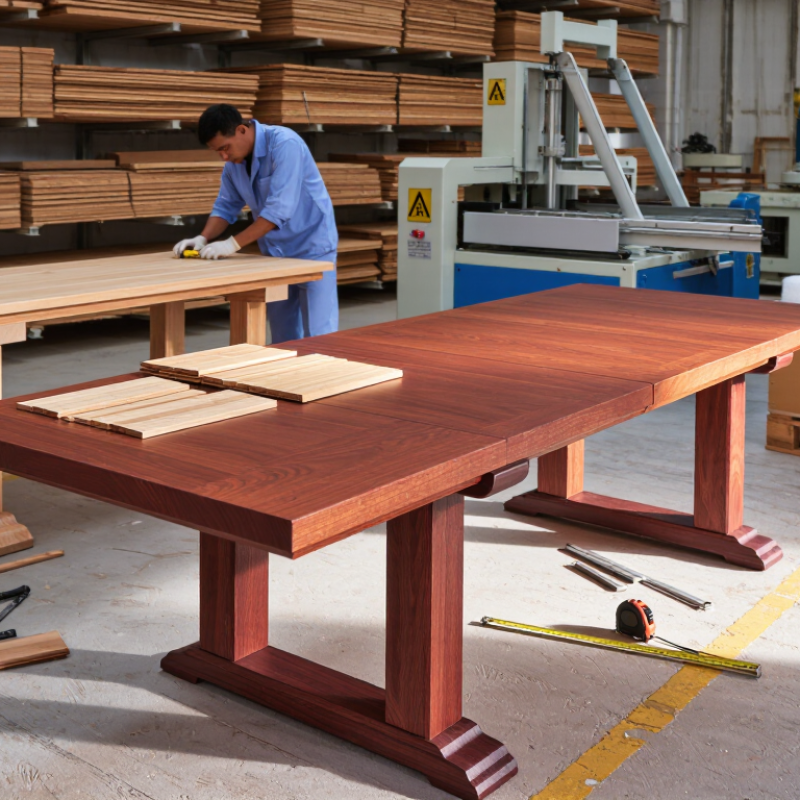
Product quality often begins with moisture control. For indoor mahogany furniture, a moisture range of 8–12% is a practical target in many climate-controlled rooms. Suppliers should measure both surface and core moisture. A dry surface can hide a damp center. That problem may appear weeks later as cracks, open joints, or warped doors. Buyers should request inspection records for each production batch. The records should identify wood thickness, testing locations, and meter calibration dates.
Kiln-drying must follow a controlled schedule, not simply high heat. Proper programs gradually reduce moisture while limiting internal stress. Thicker mahogany parts need longer cycles than thin rails or drawer components. After drying, equalization and conditioning help balance moisture throughout the boards. Suppliers should also inspect for honeycombing, case hardening, checks, and fungal staining. Small defects matter.
A reading can still mislead.
In practical inspections, I prefer several measurements from different areas. Ten boards should not be represented by one convenient number. Furniture should also acclimatize before final assembly or shipment. Export conditions may differ sharply from the destination’s indoor environment. Buyers can ask for kiln logs, moisture test methods, and corrective procedures when results fall outside 8–12%. These details reveal process discipline better than polished photographs. Even experienced factories may see uneven results during wet seasons, so honest reporting deserves attention.
Shipping Compliance: ISPM 15 Treatment at 56°C for 30 Minutes
Top Indonesian Mahogany Furniture Suppliers for Buyers
Shipping compliance often depends on the packing material, not only the furniture.
Under ISPM 15, solid wood pallets, crates, and dunnage require heat treatment at a core temperature of
56°C for 30 continuous minutes. The temperature must reach the wood’s center.
Surface heat is not enough.
Buyers should request the treatment record, batch number, kiln data, and official ISPM 15 mark before shipment.
The IPPC’s ISPM 15 standard identifies these controls as essential for reducing timber pest movement.
UNCTAD’s Review of Maritime Transport 2023 states that about 80% of global merchandise trade moves by sea.
One untreated pallet can therefore cross several inspection systems.
Delays become expensive quickly.
Mahogany furniture may not always require direct treatment, but its wooden packaging can. Import rules differ, so suppliers should verify the destination country’s requirements.
The FAO Global Forest Resources Assessment 2020 records approximately
4.06 billion hectares of global forest area, making traceability increasingly important for responsible timber sourcing.
Ask for species details, legal harvest documentation, and packaging photographs.
A certificate alone is not perfect evidence.
Inspectors may still reject damaged, altered, or poorly marked packaging.
Small gaps remain common, especially when suppliers outsource crating.
Reliable communication and clear pre-shipment checks matter.
Conclusion
Indonesian Mahogany Furniture is valued for its rich grain, durability, and adaptable design, making Indonesia an important source for international buyers. A responsible purchasing review should begin with FAO forest and timber data to understand supply conditions, forest resources, and long-term availability. Buyers should also verify supplier legality through Indonesia’s SVLK certification system and confirm whether any mahogany species require CITES Appendix II documentation before shipment.
Trade performance can be evaluated through HS 9403 furniture data, including export trends, destination markets, and changing demand. Product quality depends on proper processing, especially kiln-drying mahogany to achieve a stable moisture content of approximately 8–12% for indoor furniture. Before dispatch, wooden packaging and shipping materials should comply with ISPM 15 requirements, including approved heat treatment at 56°C for at least 30 minutes. These checks help buyers assess legality, quality, durability, and shipping readiness while supporting transparent and sustainable sourcing.