EN 12520 Class-A
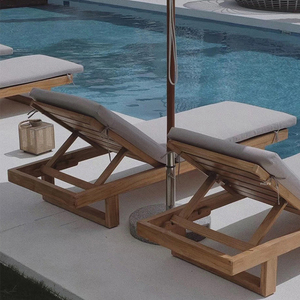
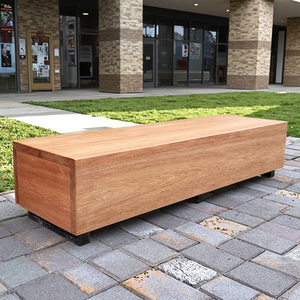
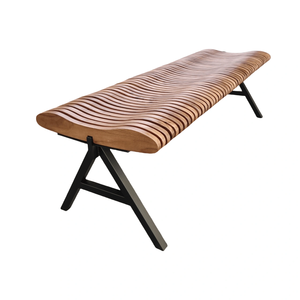
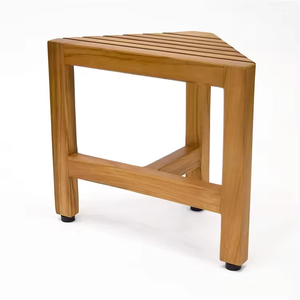
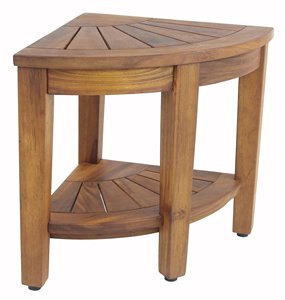
Hotel Resort Commercial Solid Teak Lounger Bench
- Wood Grade: Grade-A Indonesian Plantation Teak
- Moisture Content: Kiln Dried (8%–12% MC)
- Load Rating: EN 1728 Heavy Contract (200kg+)
EN 12520 / EN 1022 Certified Structural Integrity | SVLK Legal Indonesian Solid Wood
For institutional furniture buyers, global retail chains, and contract hospitality specifiers, verifying that a manufacturer provides authentic CE Certified Dining Chairs is not merely a legal formality—it is a critical risk-mitigation strategy. European standard directives demand strict adherence to structural safety, dimensional stability, non-toxic finish chemistry, and long-term mechanical endurance.
Unlike standard residential seating, dining chairs produced for global export undergo rigorous stress-cycle testing under European Norm (EN) frameworks. The primary CE verification path for non-domestic and domestic seating relies on three interconnected testing parameters:
Defines general safety, strength, and durability requirements for all types of domestic seating. It specifies static load testing on the seat front edge, seat stem, and backrest to ensure structural integrity under repetitive commercial usage.
Dictates precise center-of-gravity calculations to prevent forward, sideways, and rearward tipping. Chairs are subjected to overturning force vectors applied at designated seat loading points.
Establishes rigorous laboratory execution procedures for fatigue testing, including applying up to 100,000 continuous cycle impacts on the seat pan and backrest joints without structural degradation.
In solid wood dining chair manufacturing, over 82% of field failures occur at the rear leg-to-side rail joint. Legitimate CE certified dining chair manufacturers prevent joint shearing by combining deep blind mortise-and-tenon joinery with high-solids polyurethane adhesives and internal corner bracing—eliminating reliance on surface-level screws or cheap dowels.
| Testing Standard | Parameter Measured | Commercial Grade Requirement | MPP Furniture Factory Benchmark |
|---|---|---|---|
| EN 12520 (Seat Static Load) | Downward vertical force on seat center | 1,600 N (~160 kg) applied 10 times | 2,000 N (~204 kg) verified |
| EN 12520 (Back Static Load) | Rearward force on backrest top rail | 560 N (~57 kg) applied 10 times | 750 N (~76 kg) verified |
| EN 1728 (Seat Fatigue) | Cyclic vertical loads to simulate wear | 50,000 to 100,000 continuous cycles | 120,000 cycles with zero displacement |
| REACH Annex XVII | Heavy metal & VOC content in lacquers | Phthalate & lead free (< 0.1% by weight) | 100% Water-based & Low-VOC Formulations |
The procurement landscape for bulk wooden dining furniture is undergoing a structural transformation driven by legislative mandates, environmental accountability, and supply chain digitalization. Professional B2B buyers must align with manufacturers capable of navigating four macroeconomic shifts:
From 2025 onwards, entry into the European Union market mandates strict proof that timber originates from lands devoid of post-2020 deforestation. As an established Indonesian manufacturer based in Cirebon, West Java, MPP Furniture (CV. Mulya Pratama Putra) operates under Indonesia's national SVLK (Sistem Verifikasi Legalitas Kayu) timber verification framework, granting full V-Legal documentation that seamlessly satisfies EUDR and US Lacey Act due diligence.
Global buyers are rapidly diversifying away from unverified wild timber toward sustainably managed plantation hardwoods. Each species offers distinct mechanical and aesthetic benefits for commercial dining programs:
The single greatest cause of post-import warranty claims—including wood splitting, joint opening, and warping—is improper timber drying. Modern CE certified dining chair manufacturers must utilize automated, multi-stage kiln drying schedules to achieve target equilibrium moisture content (EMC) of 8% to 12% before machining begins.
The evolution of solid wood dining chair design balances architectural elegance with mass-manufacturing feasibility. Historically, ornate hand-carved chairs dominated export catalogs; today's market demands clean geometric profiles, ergonomic contouring, and flat-pack container optimization without compromising structural rigidness.
By transitioning from manual routing to 5-axis CNC machining centers, joint tolerances are held within ±0.1mm. This eliminates dry-fitting variances and ensures 100% glue surface contact across every structural mortise and tenon joint.
Modern dining chair evolution leverages steam-bending and multi-laminate shaping to create backrests that support natural lumbar curvature, increasing sit-time comfort for hospitality patrons without adding heavy foam padding.
Furthermore, surface finishing technologies have advanced significantly. High-traffic commercial dining environments require coatings that withstand alcohol spills, acidic food contact, and aggressive sanitizing agents. The application of electrostatic polyurethane lacquers combined with UV-curing chambers yields a surface hardness rating of up to 2H (Pencil Hardness Test), preventing fingernail scratches and sheen dulling.
Based in the manufacturing hub of Cirebon, West Java, MPP Furniture (CV. Mulya Pratama Putra) operates as a premier B2B manufacturer and exporter of solid wood indoor dining, outdoor teak, and woven craft collections. Operating out of a dedicated 16,000 m² factory campus staffed by over 200 skilled artisans and engineers, MPP Furniture serves importers, global retailers, and commercial project specifiers across North America, Europe, Australia, and the Middle East.
Unlike trading entities that subcontract order components to unverified cottage workshops, MPP Furniture executes every manufacturing stage internally: raw log breakdown, computerized kiln drying, precision joinery, manual sanding, electrostatic finishing, custom upholstery, and ISTA-certified export packaging.
Whether starting from CAD architectural blueprints, high-resolution renders, or physical target samples, our product development engineering team reverse-engineers concepts into stable, factory-producible SKUs while calculating precise CBM yield per 40HQ container.
Partner with an Established Indonesian Dining Chair Factory
Get a QuoteDetailed guidance regarding regulatory compliance, factory audits, ordering logistics, and custom production specifications.
CE marking for non-electrical furniture seating involves verifying compliance with European safety standards—specifically EN 12520 for domestic seating strength and durability, and EN 16139 for non-domestic commercial contract seating. The factory must conduct accredited third-party lab testing (such as SGS, TUV, or Intertek) or maintain internal test rigs that apply standardized force vectors (up to 2,000 N) to prove structural integrity, tip-resistance (EN 1022), and non-toxic surface coating chemical compliance (REACH).
Our standard production lead time is 60 to 75 days following golden sample approval and deposit confirmation. For custom OEM/ODM designs requiring dedicated tooling or unique carvings, initial sampling takes approximately 15–20 days. Our standard minimum order quantity is one 20ft container per order, though we strongly recommend 40HQ containers (approx. 65–70 CBM) to optimize ocean freight cost per unit across mixed chair and table SKUs.
Wood instability is caused by moisture mismatch between the manufacturing facility and the destination climate. We control this by subjecting all timber to computerized kiln drying until the core moisture content reaches 8%–12%. Furthermore, moisture readings are electronically logged for every timber batch prior to machining. During container stuffing, we utilize industrial moisture-absorption poles and sealed container liners to prevent "container rain" during ocean transit.
Yes. All timber processed in our Cirebon facility is 100% legal and verified under Indonesia’s national SVLK certification system. Every export container is accompanied by an official V-Legal Document issued by government-accredited auditing bodies. This provides complete chain-of-custody documentation tracing the timber back to certified sustainable plantation concessions, satisfying both the EU Deforestation Regulation (EUDR) and the US Lacey Act requirements.
Absolutely. Over 65% of our production volume consists of OEM and ODM private label collections for international brand owners and contract furniture distributors. We can manufacture directly from your CAD files or technical shop drawings. Alternatively, you can supply mood boards or reference images, and our in-house engineering team will develop 3D structural models and physical golden samples for your review prior to mass production.
For traditional brick-and-mortar retail containers, we utilize standard 5-ply heavy corrugated cartons with corner edge protectors and inter-leaved foam sheets. For e-commerce drop-ship clients, we engineer specialized ISTA-3A mail-order packaging featuring high-density polyethylene (HDPE) foam armor, drop-tested 200 lb burst-strength cartons, and reinforced edge guards to ensure zero damage during parcel delivery.
We implement a strict 4-stage Quality Management System: 1. IQC (Incoming Quality Control): Moisture content and grain defect inspection upon sawmill intake. 2. IPQC (In-Process Quality Control): Machining tolerance and joint fit check during frame assembly. 3. FQC (Final Quality Control): Surface finish, sheen level, and structural stability check post-coating. 4. OQC (Outgoing Quality Control): Pre-packaging random AQL 2.5 drop tests and full container loading photographic reporting provided to the buyer prior to vessel departure.
Connect with our export sales engineering team to receive complete product catalogs, timber material swatches, CE test documentation, or a detailed quotation for your OEM/ODM dining chair program.